2024
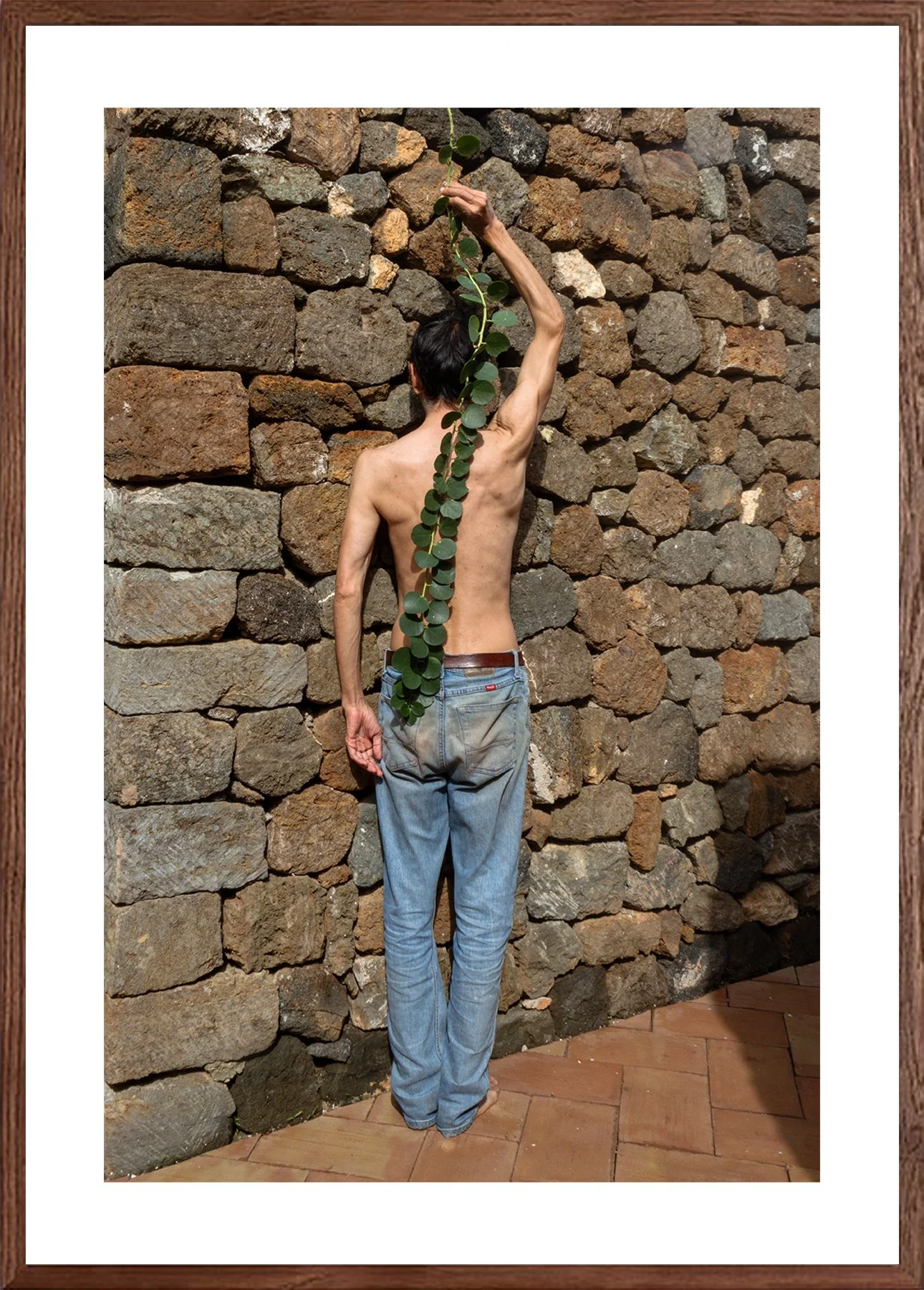
Colonna deformata (Columna deformada), 2024 Fotografía digital Inyección de tinta sobre papel de algodón 60 x 43 cm Ed. 1/3 + 2 P.A.
Sobre la obra:
La acción de sostener una rama de alcaparra frente a un muro de piedra plantea una reflexión sobre la relación simbiótica de adaptación y resistencia entre el cuerpo humano y la naturaleza. La roca, intervenida por el hombre para convertirse en material arquitectónico, es también el hábitat natural de esta planta, una especie rústica que se adapta a paredes y suelos áridos y rocosos. De forma similar, el cuerpo humano, como la alcaparra, tiene que encontrar formas de resistir y adaptarse a un entorno que no ofrece facilidades, marcado por una tensión constante.
Así, el hecho de sostener la rama y colocarla sobre la columna vertebral –como una extension de la misma–, no solo hace referencia a los problemas de espalda de los isleños, quienes suelen encorvarse para recolectar ciertos comestibles, sino que también abre la pregunta: ¿quién sostiene a quién? Este gesto, paradójicamente, nos invita a reconsiderar la isla no como un paraíso, sino como un territorio hostil, en el que el ser humano debe comprender y trabajar en simbiosis con la naturaleza para su propia supervivencia.
Colonna deformata (Deformed column), 2024 Digital photography Inkjet print on cotton paper 60 x 43 cm Ed. 1/3 + 2 A.P.
About:
The act of holding a caper branch in front of a stone wall proposes a reflection on the symbiotic relationship of adaptation and resistance between the human body and nature. The rock, transformed by human intervention into architectural material, is also the natural habitat of this plant—a hardy species that adapts to walls and arid, rocky soils. In a similar way, the human body, like the caper plant, must find ways to resist and adapt to an environment that offers no ease, shaped by a constant state of tension.
Thus, the gesture of holding the branch and placing it along the spine—as an extension of it—not only refers to the back problems of the island’s inhabitants, who often hunch over to collect certain edible plants, but also opens up a question: who supports whom? This gesture, paradoxically, invites us to reconsider the island not as a paradise, but as a hostile territory, in which human beings must understand and work in symbiosis with nature in order to survive.