2025
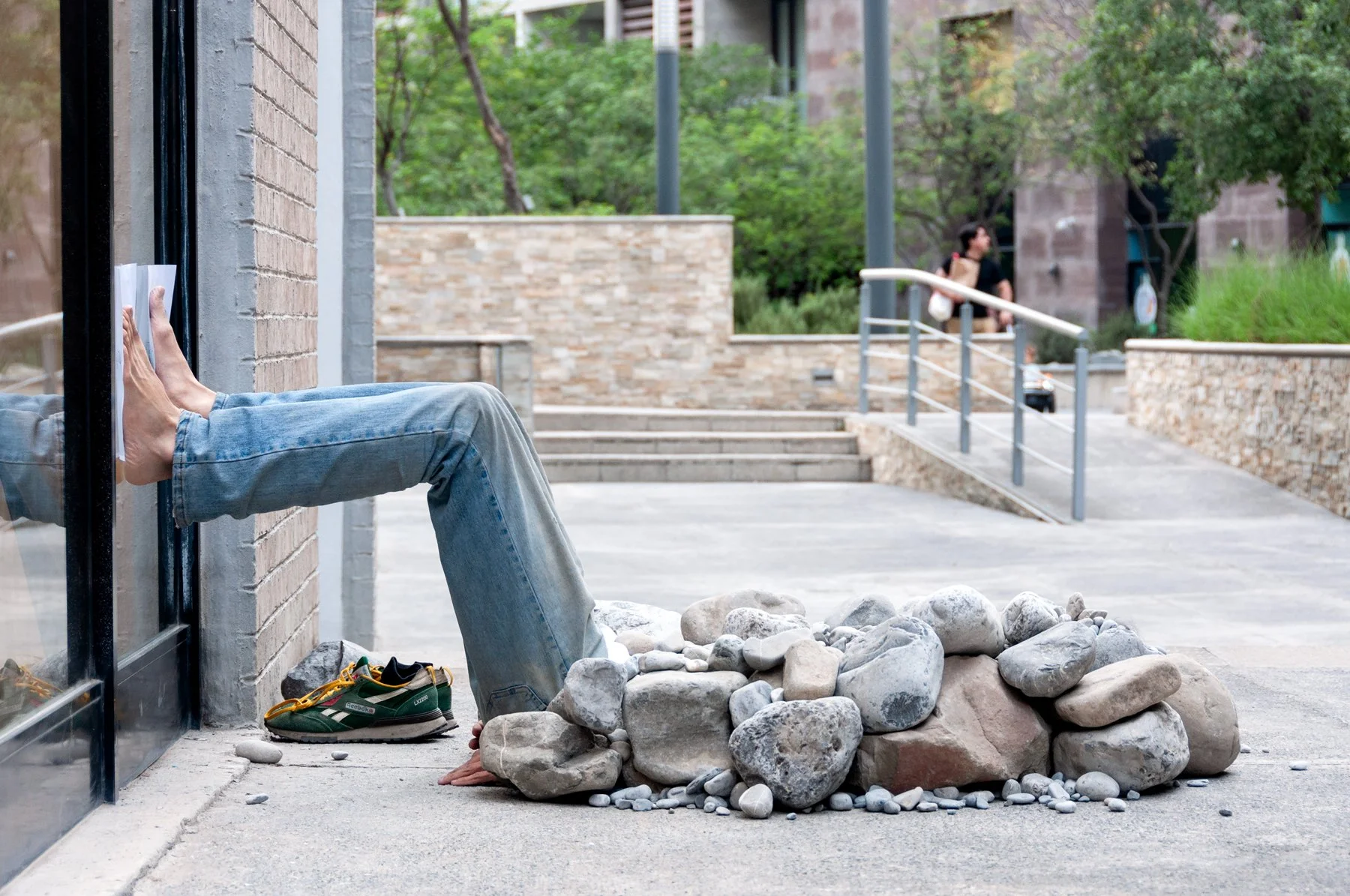
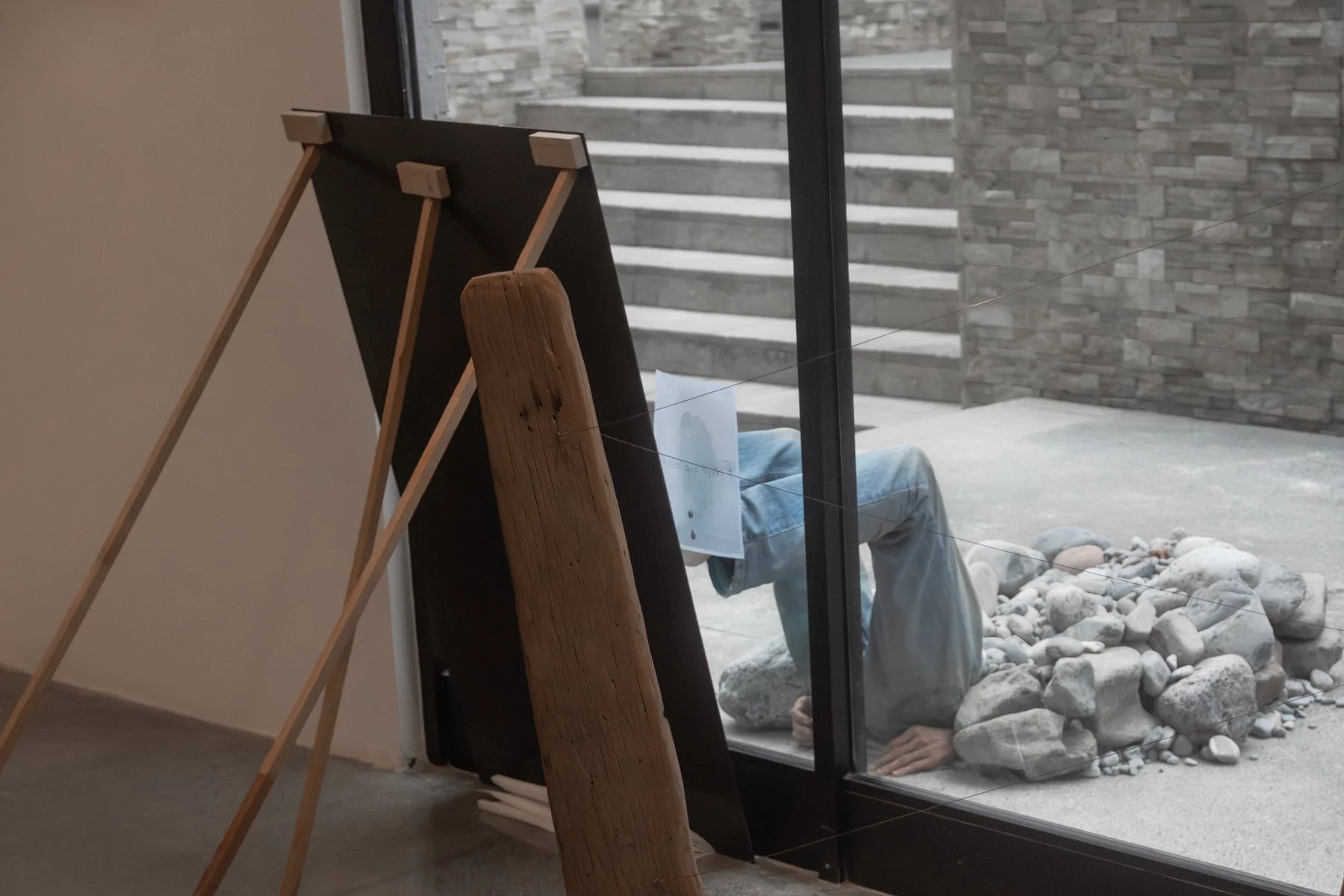
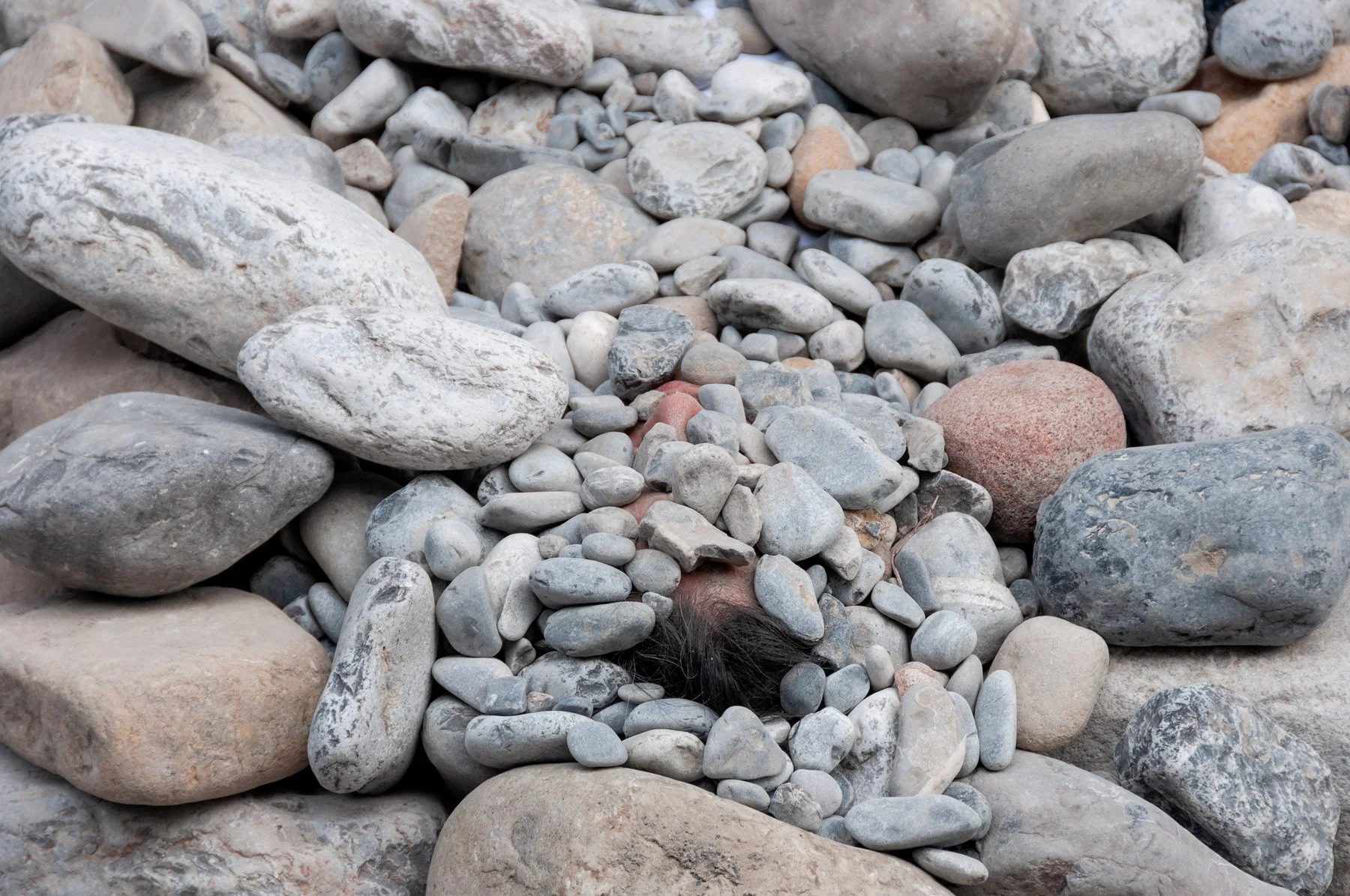
El arte perdido de la conversación, 2025 Performance Duración: 00:60:00 minutos
Sobre la obra:
La acción se realizó en la vitrina de la galería (Emma Molina), un espacio liminal entre interior y exterior. En la parte interna se colocó un espejo que reflejaba un cuerpo ubicado en el exterior, semi sepultado por un montículo de piedras durante poco más de una hora.
El cuerpo, descalzo, sostenía con ambos pies y bajo tensión constante dos hojas con los textos “finjo que estás ahí” / “y tú finjes que soy feliz”. Estas frases solo podían leerse al aproximarse al espejo, donde texto, cuerpo y reflejo del espectador se superponían, involucrando al público dentro de la obra.
El performance propone una conversación fragmentada, mediada por el espejo, la distancia y el esfuerzo corporal. El espectador llega cuando la conversación ya está ocurriendo y solo puede acceder a ella mediante la intervención de su propio reflejo, lo que desplaza y cuestiona su posición dentro del sistema cultural que la contiene, en este caso el contexto de Monterrey.
En este gesto, la vitrina se activa no solo como dispositivo de exhibición, sino como un espacio intermedio donde se configuran relaciones de distancia, exposición y fricción.
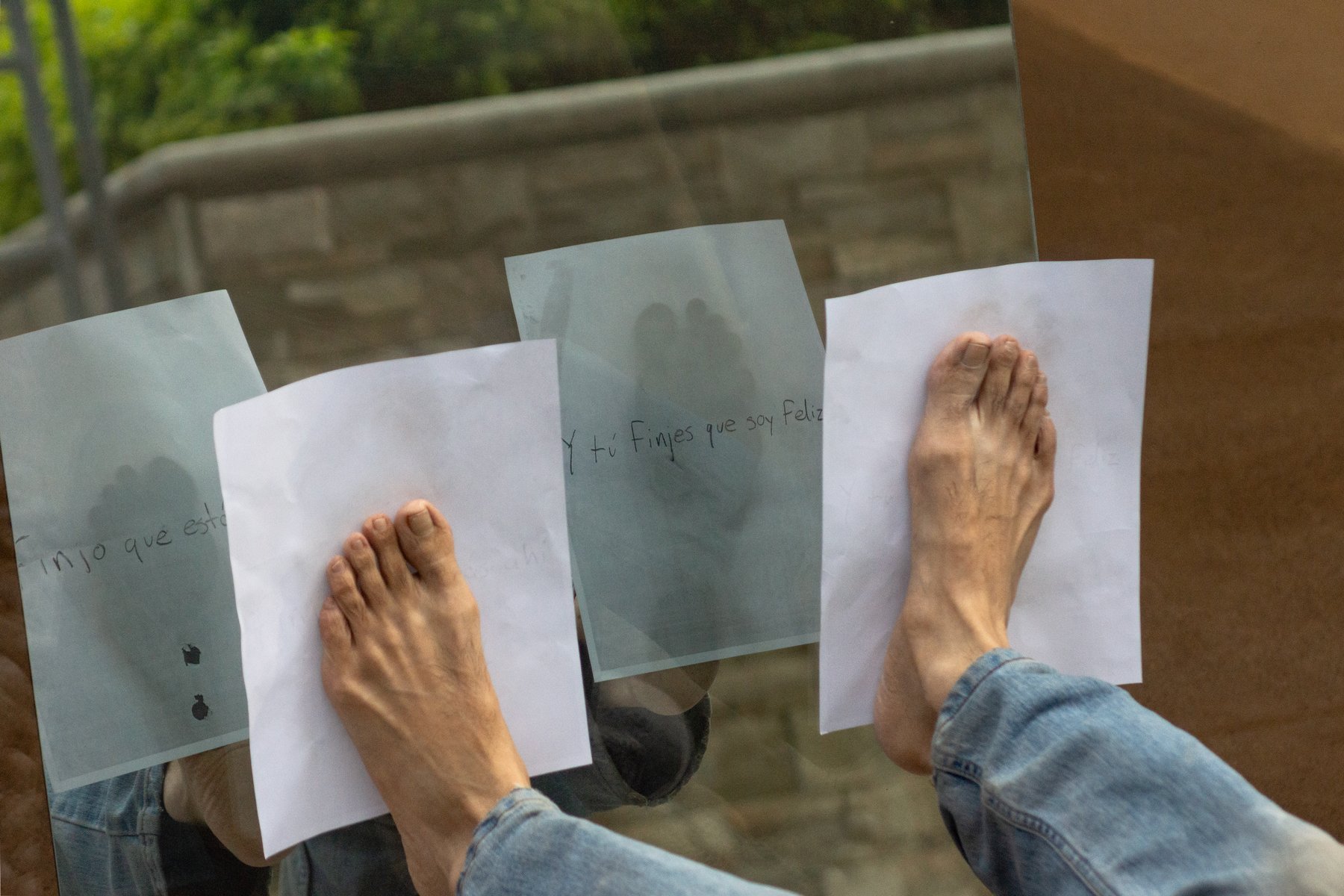
El arte perdido de la conversación (The lost art of conversation), 2025 Performance Duration: 00:60:00 minutes
About:
The action took place in the gallery’s (Emma Molina) display window, a liminal space between interior and exterior. Inside, a mirror was installed, reflecting a body positioned outside, semi-buried beneath a mound of stones for just over an hour.
The barefoot body held two sheets of paper with the texts “I pretend you’re there” / “And you pretend I’m happy”, pressed in place with both feet. These phrases could only be read by approaching the mirror, where text, body, and the viewer’s reflection overlapped, introducing the viewer into the work.
The performance proposes a fragmented conversation, mediated by the mirror, distance, and bodily effort. The viewer arrives when the conversation is already taking place and can only access it through the intervention of their own reflection, which displaces and questions their position within the cultural system that contains it—in this case, the context of Monterrey.
In this gesture, the display window is activated not only as a device of exhibition, but as an intermediate space where relations of distance, exposure, and friction are configured.